
PSNI accepts call for wheelchair-accessible custody transport after Ombudsman investigation
The PSNI has accepted a recommendation to improve transport arrangements for wheelchair users after a Police Ombudsman investigation found there were no disability-access vehicles available for officers to transport wheelchair users into custody.
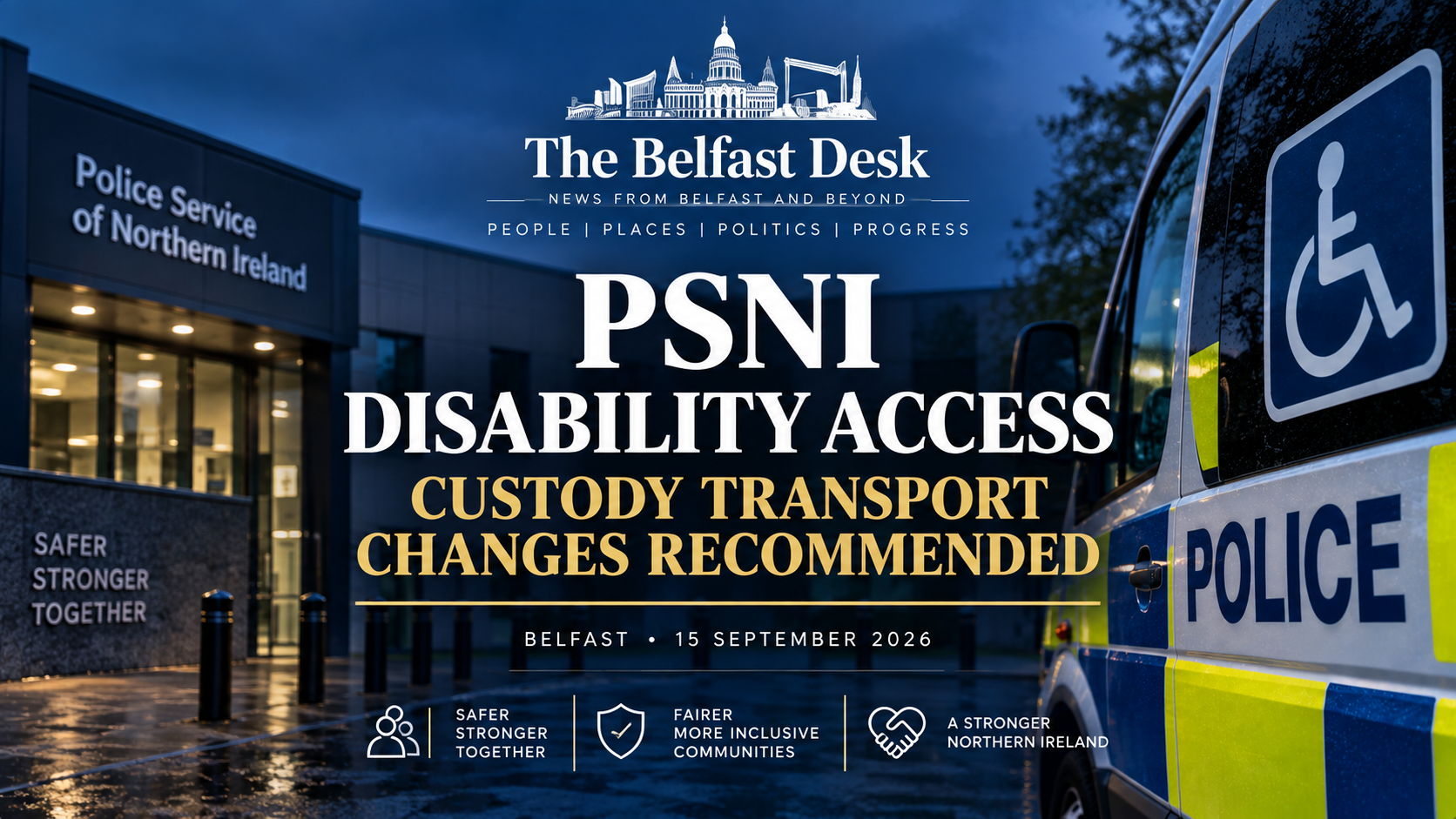
The recommendation followed an investigation into a complaint arising from an incident at a home in County Down in December 2024.
While investigators found no evidence of misconduct by individual police officers, the case highlighted wider shortcomings in the provision of suitable transport and facilities for wheelchair users.
Complaint followed County Down arrest
The investigation began after a wheelchair user complained that police had failed to provide a suitable vehicle to transport him into custody.
The complainant made a total of seven allegations concerning the incident.
These included claims that officers had failed to caution him, that he had been injured while being assisted into a police vehicle, that officers had mocked him, and that an officer had watched while he changed clothes.
He also alleged that medication had not been provided while he was in custody and that officers had failed to take appropriate account of his disability when communicating with him.
Body-worn video examined
Police Ombudsman investigators examined body-worn video footage as part of their investigation.
The footage confirmed that the complainant had been cautioned during his arrest and that, after officers carried him to the police vehicle, he manoeuvred himself into the vehicle without assistance.
Investigators found that no injury occurred during this process.
They also found no evidence that officers mocked the complainant or behaved insensitively towards him because of his disability.
The investigation established that body-worn video had been switched off while the man was changing clothes. A police officer remained outside the room because the man was under arrest at the time.
Investigators also found no breach of the PSNI Code of Ethics regarding the allegation that medication was not provided, as police officers are not permitted to administer medication.
Man found unfit for detention
Following an examination by a healthcare practitioner, the complainant was deemed unfit for detention because his physical needs could not be met in custody.
Arrangements were subsequently made for him to be returned home.
Although the investigation did not find evidence of misconduct by individual officers, it identified a broader issue with the PSNI’s ability to transport wheelchair users safely and appropriately.
Wheelchair-access vehicles recommended
The Police Ombudsman’s Office recommended that the PSNI explore providing a wheelchair-friendly vehicle for each policing district.
Alternatively, it recommended establishing whether suitable ramps could be obtained and fitted to a cell van in each district.
The PSNI has accepted the recommendation.
Senior Investigations Officer Martin McCaffery said the recommendation reflected the Ombudsman’s view that improvements to disability access were required to protect the rights and dignity of disabled people.
The findings mean the case has resulted in a recommendation for a wider change in PSNI policy and provision, despite investigators finding that the evidence did not support allegations of misconduct against the individual officers involved.