MLAs debate controversial Bill to criminalise conversion practices in Northern Ireland
A proposed new law that would criminalise certain conversion practices aimed at changing or suppressing a person’s sexual orientation or gender identity has been debated by MLAs at Stormont.
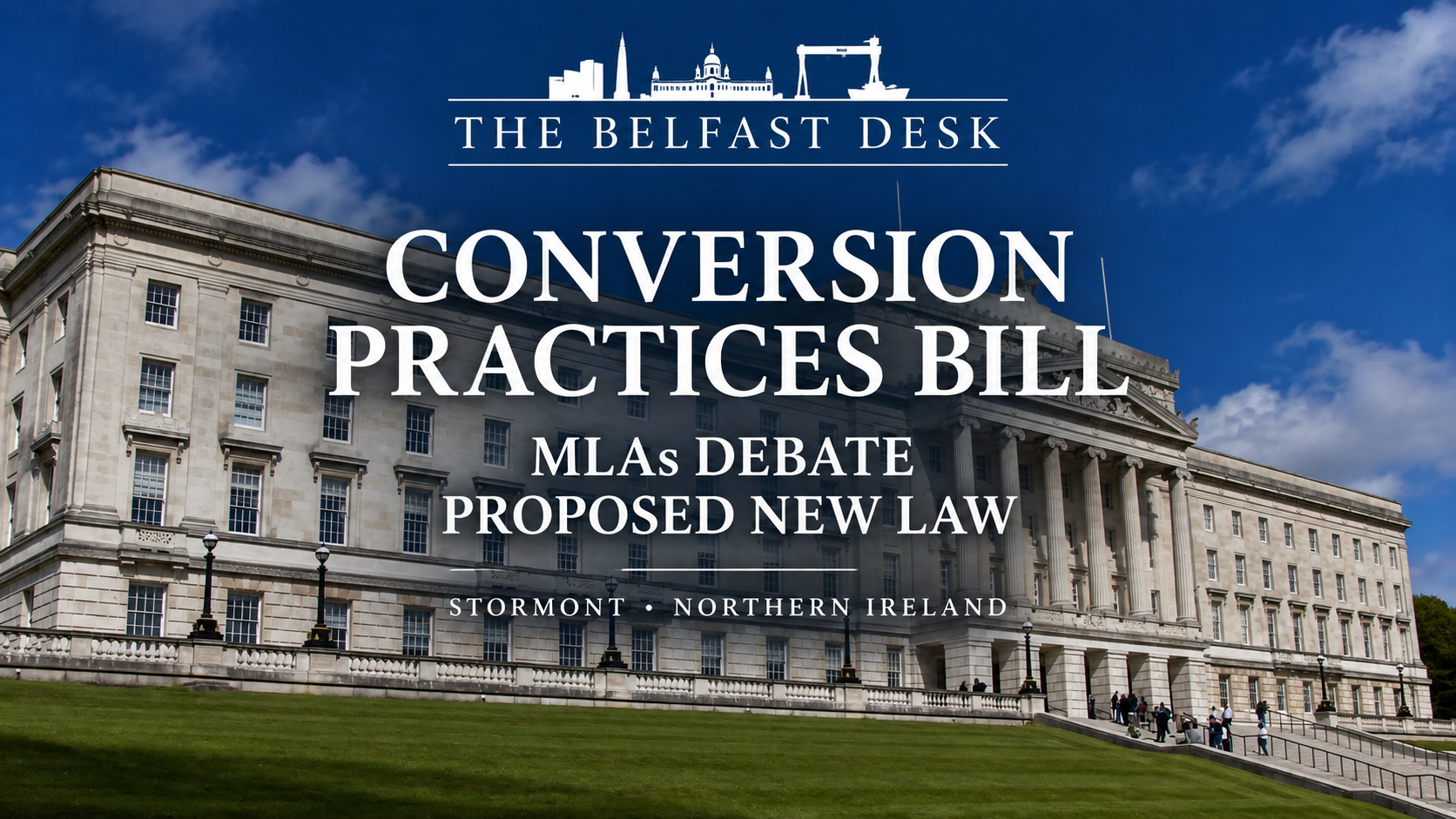
The Conversion Practices (Criminalisation) Bill was introduced by Alliance Party deputy leader Eóin Tennyson as a Private Member’s Bill and received its Second Stage debate in the Northern Ireland Assembly on Tuesday.
If passed, the legislation would create three new criminal offences relating to conversion therapy, coercive conversion behaviour and taking or facilitating someone leaving Northern Ireland to undergo conversion practices.
The most serious offences could carry a maximum sentence of two years in prison.
What would the Bill criminalise?
Under the proposed legislation, providing conversion therapy would become an offence where a person intends to change or suppress another person’s sexual orientation or gender identity and the person subjected to the therapy suffers physical or psychological harm as a result.
The Bill defines conversion therapy as including counselling or other talking therapy, coaching or instruction, and treatment or purported treatment.
Psychological harm is defined in the legislation as including fear, alarm or distress.
A separate offence would cover coercive conversion behaviour.
This includes violent or threatening behaviour, controlling or monitoring someone’s day-to-day activities, restricting their freedom, or behaviour which makes them feel frightened, humiliated, degraded, punished or intimidated.
For this offence, the coercive behaviour would have to occur on two or more occasions, be intended to change or suppress sexual orientation or gender identity, and result in physical or psychological harm.
The Bill would also create an offence of causing or facilitating someone to leave Northern Ireland for the purpose of undergoing conversion therapy or coercive conversion behaviour.
What would not be covered?
The legislation contains provisions intended to distinguish conversion practices from conversations or expressions of belief.
It states that there is no intent to change or suppress someone’s sexual orientation or gender identity where a person is solely expressing beliefs or opinions without directing them towards a particular sexual orientation or gender identity.
It also provides a defence where a person can show that their actions were reasonable in the particular circumstances.
Certain therapy carried out by regulated healthcare professionals in accordance with the standards and codes of ethics of specified regulatory bodies would also fall outside the conversion therapy provision.
Consent would not, however, provide a defence to any of the three proposed offences.
Anyone convicted summarily could face up to 12 months in prison, a fine, or both. A conviction on indictment could result in a prison sentence of up to two years, a fine, or both.
Tennyson says gaps remain in existing law
Opening the Second Stage debate, Mr Tennyson argued that existing legislation does not adequately address conversion practices.
He told MLAs that no-one should be subjected to abuse, harm or coercion because of who they are or who they love, and said gaps in current law allowed what he described as a specific form of abuse to continue.
Mr Tennyson referred to testimony from people who reported being subjected to conversion practices and said the legislation was intended to ensure such conduct could be specifically prosecuted.
The explanatory memorandum accompanying the Bill acknowledges that some conduct may already fall under existing offences, including physical assault or domestic abuse, but says there is currently no Northern Ireland legislation specifically prohibiting conversion practices.
Unionist MLAs raise concerns
The proposals have faced opposition from some unionist MLAs, who have raised concerns about freedom of expression and the potential scope of the legislation.
DUP MLA Phillip Brett questioned whether examples of threatening or abusive behaviour cited in support of the Bill were already covered by existing criminal law.
Ulster Unionist Party leader Jon Burrows warned that the legislation could have unintended consequences for parents discussing sexuality or gender identity with their children.
Mr Burrows said there was no place for bullying or harassment on the basis of sexual orientation, but argued that the proposed Bill was not the appropriate way to address the issue.
Supporters of the legislation reject claims that ordinary conversations would be criminalised, pointing to the requirements concerning intent and harm contained within the Bill.
A rally in support of the legislation was also held outside Parliament Buildings ahead of Tuesday’s debate.
Consultation attracted more than 1,200 responses
A 16-week consultation carried out by the Bill’s sponsor between December 2024 and March 2025 received 1,291 responses, including 38 from organisations.
According to the Bill’s explanatory memorandum, respondents broadly supportive of legislation argued that existing law contained gaps and that conversion practices could cause psychological harm.
Those opposed raised concerns about definitions, freedom of belief and expression, and the possibility of legitimate therapeutic, pastoral or parental support being caught by the legislation.
The explanatory memorandum says those concerns influenced the inclusion of safeguards within the Bill.
If ultimately passed by the Assembly and granted Royal Assent, the legislation is proposed to come into operation 12 months later.
Have your say on the Bill
The Northern Ireland Assembly’s Committee for Communities is inviting members of the public and interested organisations to submit their views on the Conversion Practices (Criminalisation) Bill.
The Committee is seeking opinions on the Bill’s objectives, proposals and potential consequences as part of its scrutiny of the legislation.
An online survey has been launched through the Assembly’s Citizen Space platform, with responses helping to inform the Committee’s consideration of the Bill and any recommendations it may make during the legislative process.
The deadline for submissions is 1 October 2026.