
Queen’s Belfast joins €300m European Solar Telescope project to study the Sun
Queen’s University Belfast is taking part in a €300 million European project to build an advanced solar telescope that could transform scientists’ understanding of the Sun and its effects on Earth.
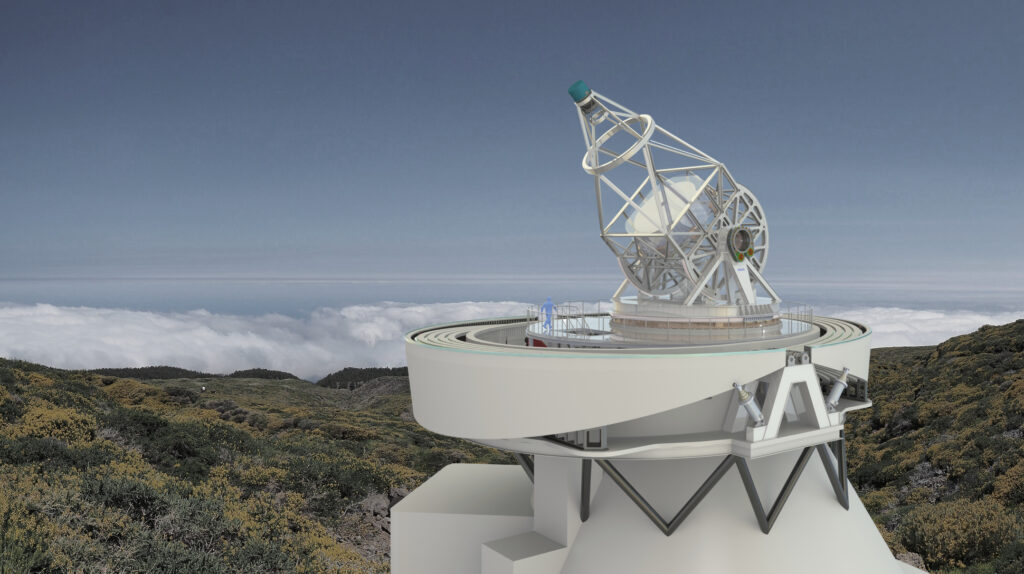
The European Solar Telescope (EST) will be constructed on La Palma in the Canary Islands and will feature a 4.2-metre mirror capable of observing the solar atmosphere in extraordinary detail.
Researchers hope the facility will provide new insights into solar activity, including potentially disruptive space-weather events that can affect communications, navigation systems and satellites.
Queen’s is among several leading UK universities contributing to the international project.
European Solar Telescope to transform solar research
The European Solar Telescope is being developed to allow scientists to examine the Sun’s atmosphere at smaller scales than previously possible.
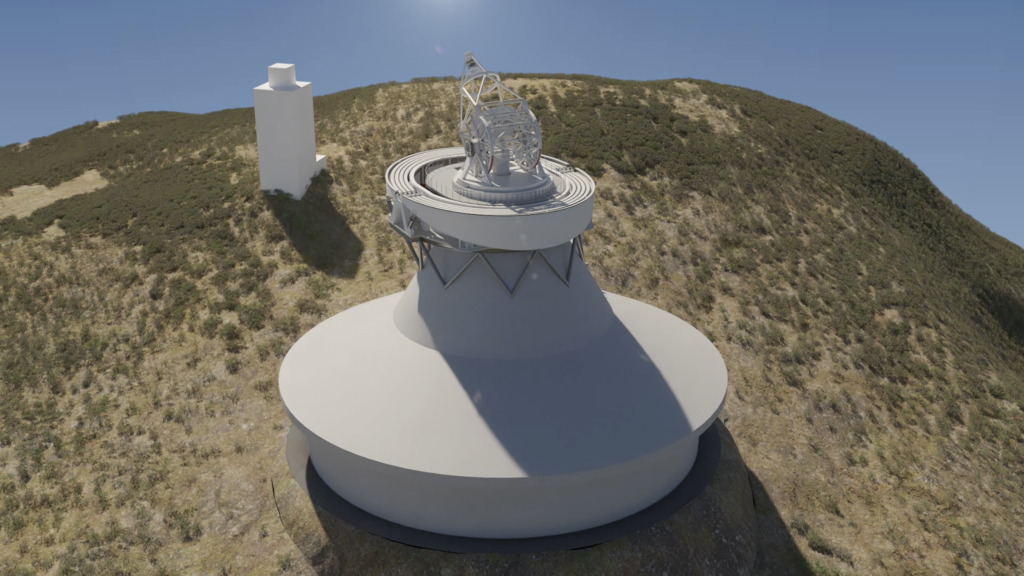
Its advanced instruments will enable researchers to observe different layers of the solar atmosphere simultaneously, using multiple wavelengths.
This will help scientists investigate how magnetic fields influence solar activity, including sunspots and solar flares.
The project is expected to provide valuable information about the processes driving space weather and how these events affect the environment surrounding Earth.
Understanding the effects of space weather
Space weather refers to changes in the space environment caused by activity on the Sun.
Powerful solar events can interfere with satellite communications, GPS navigation and other technologies that depend on signals travelling through space.
Increased radiation associated with certain solar events can also present risks to astronauts and, in some circumstances, aviation operations.
By studying the Sun in greater detail, scientists hope to improve their understanding of these events and support more accurate space-weather forecasting.
The telescope will also complement European space missions by providing detailed observations from Earth.
Queen’s University Belfast joins international collaboration
Queen’s University Belfast is part of a UK Universities Consortium established to support the European Solar Telescope.
The consortium is led by the University of Sheffield and includes Aberystwyth University, Durham University, the University of Exeter, the University of Glasgow, University College London and RAL Space.
Professor Michail Mathioudakis, from the Astrophysics Research Centre at Queen’s, welcomed the opportunities the project will provide.
He highlighted the university’s established research into solar magnetic fields, sunspots and solar flares, alongside its expertise in developing scientific instruments.
The professor said the telescope’s resolution and sensitivity would allow scientists to investigate the solar atmosphere in ways not previously possible.
He added that Queen’s researchers would be well placed to benefit from the scientific discoveries made using the new facility.
European project receives landmark status
The European Solar Telescope received official landmark status from the European Strategy Forum on Research Infrastructures in September 2026.
The designation recognises the project’s scientific importance and its strategic role within Europe’s research infrastructure.
Héctor Socas-Navarro, Director of the EST Foundation, welcomed the recognition.
He said the project represented years of international collaboration and that the designation acknowledged the maturity and significance of the scientific programme.
The €300 million telescope will be developed through cooperation between research institutions across Europe.
Once operational, it is expected to become a major facility for solar physics research, helping scientists investigate the Sun and better understand its influence on the space environment surrounding Earth.
Official website: Queen’s University Belfast
Other news: Barack Obama receives honorary doctorate from Queen’s University Belfast