
Northern lights Northern Ireland: Met Office forecasts further sightings
Northern lights could be visible across Northern Ireland over the coming nights as the Met Office forecasts further geomagnetic activity between Sunday 11 and Tuesday 13 October.
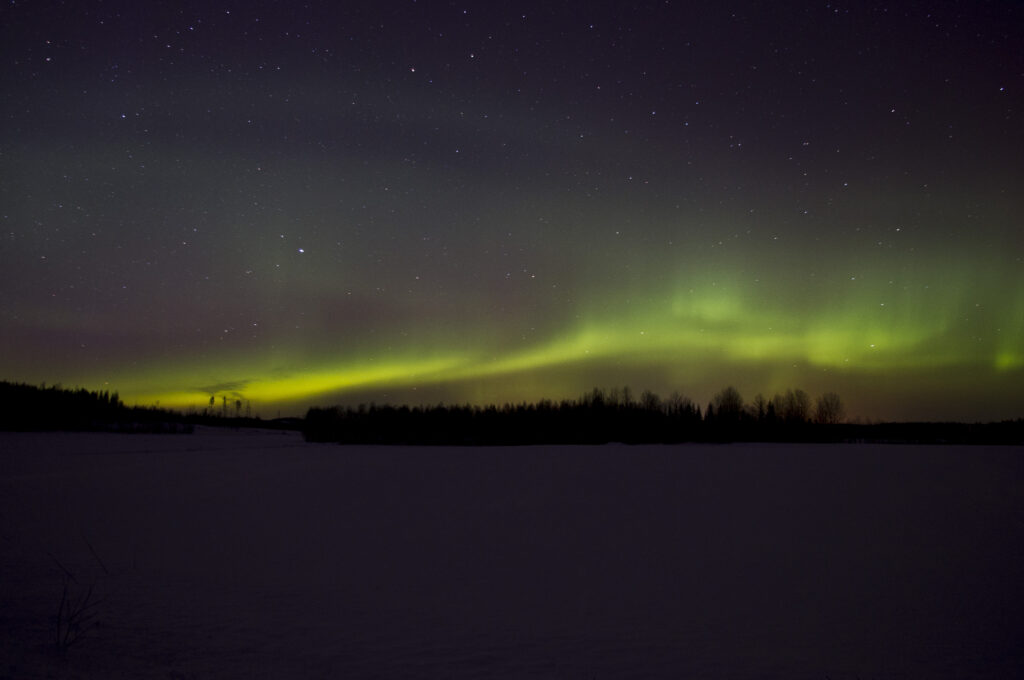
By jansku136, CC BY 3.0
The aurora borealis illuminated skies across parts of the United Kingdom over the weekend, with sightings reported as far south as southern England.
The Met Office has now confirmed that continued solar activity could create further opportunities to see the colourful displays.
However, cloud cover across Northern Ireland may make sightings difficult.
Northern lights Northern Ireland forecast for Sunday and Monday
The Met Office’s latest space-weather forecast, issued on Sunday afternoon, identifies a combination of coronal mass ejections and a high-speed stream of solar wind as the main factors behind the increased activity.
Minor geomagnetic storms are considered likely on Sunday and Monday, with moderate storms also possible.
Forecasters have identified a slight possibility of isolated strong geomagnetic activity on Monday 12 October.
The conditions could allow the northern lights to become visible across Scotland, Northern Ireland and parts of northern England where skies remain clear.
Cloud cover could affect Belfast sightings
Despite the favourable space-weather outlook, local weather conditions could limit opportunities to see the display.
The Met Office is forecasting increasing cloud across Northern Ireland on Sunday evening, accompanied by outbreaks of rain and strengthening winds.
Conditions are expected to remain largely overcast overnight.
Monday is also forecast to be cloudy, with occasional drizzle and further rain developing later.
Any breaks in the cloud could provide an opportunity to see the aurora, although sightings cannot be guaranteed.
How to see the northern lights
The northern lights occur when charged particles released by the Sun interact with Earth’s magnetic field and gases in the upper atmosphere.
These interactions produce the colourful displays commonly associated with the aurora borealis.
Oxygen can produce green and red light, while nitrogen contributes blue and purple colours.
People hoping to see the display are advised to find a location away from streetlights and other sources of light pollution.
A clear view towards the northern horizon can improve the chances of spotting the lights.
The aurora may also appear more clearly in photographs taken using a camera’s night mode or long-exposure settings than it does to the naked eye.
The Met Office says opportunities for further sightings could continue until Tuesday 13 October, depending on solar activity and local weather conditions.
External links:
Northern Ireland weather forecast: Met Office — Northern Ireland Regional Forecast
Official guidance on viewing the aurora: Met Office — Northern Lights Explained
Other news: Three masked men throw petrol bombs at police car in Strabane